I recently purchased my first home this past October and immediately began a project to construct a new bathroom in the basement. I wanted to add a basement bathroom so that the bedrooms downstairs could use it and it is provides one of the biggest return on investments for a house. I felt that I had enough skills to complete the project with a little help. Well it turned out I need more help than I thought. I did my research by reviewing do it yourself (DIY) manuals and speaking with professionals. My goal was to have it done in 2 months (working on it during the weekends).
Unfortunately it is January 27th, 2013 and the it is still not finished due to my lack of planning, understanding, and execution. I should of incorporated more planning into the project which would of made me aware of the mistakes I made along the way up to this point and would of eliminated the set backs I encountered.
A simple feasibility study would of outlined that I:
1: Lacked the plumbing skills and know how to run piping correctly for pressure.
2: Did not purchase the correct materials and used the wrong materials in some instances.
3: Didn't think to consult with a city inspector before choosing the location of the new bathroom
4: Didn't have some of the necessary equipment needed to access the old pipes under the ground.
The biggest mistake was that I did not account for the adjustment of water pressure needed with the addition of a full bathroom. When the ground was all dug up, luckily a friend who has much more construction experience was able to help me lay the pipe in a manner that allowed for new piping to tap into existing piping. My mistake was running the piping through the frame work of the bathroom and not allowing enough venting. I also began installing the shower, sink, vanity, and toilet before installing the drywall because I wanted the bathroom functioning. That mistake tripled the amount of time it took to hang the dry wall because everything had to be cut around the fixtures that I installed. As a lesson learned, I should of done more research and preparation as well as consulting (effective communication) with industry professionals (SME's). If I would of done this I could of put together a plan to follow as well as give me a visual map along the way. Perhaps I was not comfortable with my learning environment. If the learner is comfortable with the learning environment, they are more apt to take to it (Siemens, 2012).
Sunday, January 27, 2013
Sunday, December 23, 2012
REFLECTION
Educational technology is becoming a part of every community and
organization. With the world becoming more connected, educational technology is
one of the fastest growing segments. A large majority of educational
institutions are designing and implementing educational technology systems into
their organization. For example, Cisco TelePresence Classroom Experience has
helped high schools, colleges, and universities around the world get connected
so learners can experience next-generation teaching, learning, and improved
administrative efficiency. Apple also does a great job of promoting educational
technology. A lot of schools have adopted iBooks and iTunes U. “Now easier than
ever to unleash the full potential of iTunes products in your classroom by
creating your own courses for iTunes products. You get to share your ideas in a
powerful new way, and your students get a rich, immersive learning experience
by using the iTunes U application” (Apple).
The advancement of technology over the next 10 years will help to bridge
the gap in educational differences worldwide. As new technology is developed processes
become more efficient which in turn makes products more affordable. In the next
ten years, a school in a third world country may be able to afford a computer
that they normally would not of been able to in the past.
For an educational institution to be successful, they must continue to
research, create, and invest in educational technology. There are many
educational technologies available but selecting the best and most appropriate
technology tools for your institutions success is vital. With the constant flow
of information and new technology, information is more abundant than ever. “The
span of time between learning something new, being able to apply it, and
finding that it is outdated and no longer useful is a key concept organizations
must be aware of” (Gonzalez).
With the implementation and advancement of educational technology, more and
more organizations are beginning to invest specifically in distance education
programs or are continuing to build their existing distance education
infrastructure. Distance education has a tremendous amount of potential but
requires a continued investment. For Rasmussen College students distance
education is; cost effective, provides on demand learning, convenient, and
flexible. It also provides students with the technological skills more and more
employers are requiring.
The publishing community already plays a large role in educational
technology; information is now available at the touch of a button. People are
not now connected or wired in more than ever. It has become an expectation to
be able to access information when desired. The publishing community has taken
advantage of this by publishing any and all types of information. What we as
consumers, learners, and educators need to be is cognizant of the plethora of
false and misleading information that is being published.
As instructional designers, it is our job to not only work with our
colleagues to create beneficial learning experiences for our students but to
also continue to educate ourselves about new and developing learning theories
and combine them with the best available technology that is appropriate for our
learners and organization.
Sunday, December 16, 2012
Pre-Planning Strategies
Pre-Planning
Strategies
What are some of the pre-planning strategies the trainer needs to
consider before converting his program?
·
Create an orientation so that effective
course orientation can be achieved by students.
·
Depending on how much you need to
restructure your course, you can strip the syllabus of dates, directions,
goals, and requirements so that you have only content. From there you can
restructure the course based on the modality (blended).
·
Make sure you have the course fully
functional on the first day so that you can concentrate on teaching.
·
Make sure you have your instructions for
students in a multiple locations and are clear and concise.
·
Equate your classroom/face to face
activity that is currently implemented and convert & equate the activity
level to online/blended.
·
Decide what your pedagogical approach
will be:
o
Will it include discussions, individual,
collaborative, all of the previous?
o
How much of the course will be
performance based now that it is a blended modality?
·
The
facilitator is responsible for encouraging individuals in the course to become
thoughtful inquirers, autonomous thinkers, and constructive co-learners
(Matthews-DeNatale & Doubler, 2000)
·
What constraints can you plan for before
the course starts?
o
What constraints might your run into
when the course starts?
§ Plan
of action should your run into constraints once your course is live?
·
What new evaluation techniques should be
created with the conversion of the course (blended)?
·
Align your new learning objects with the
entire course.
o
Make sure it aligns with the assessment.
What aspects of his original training program could be enhanced in
the distance learning format?
·
Now that all of the information
is available online via a server, the instructor should make sure he digitizes
as much of the content as possible. This will increase communication and
collaboration between all of the students and the instructor.
·
He will also be able to add more
media to the current content i.e. videos, graphics, animations, audio etc.
·
Corrections, additions, access,
and delivery of the content can be made quickly and efficiently.
How will his role, as trainer, change in a distance learning
environment?
The instructor will still be in
charge of facilitating effective, positive and constructive communication. Garrison, Anderson, and Archer (2000) defined teaching
presence as “The design, facilitation, and direction of cognitive and social
process for the purpose of realizing personally meaningful and educationally
worthwhile learning outcomes” (p. 5).
The instructor will now have
more flexibility and accesses to his learners with the blended course. However,
he will have to learn and build other methods of communication into his course
that are directly related to online learning. For example, updates via email, course
mail, announcements, etc. Facilitators must
engage in meaningful conversation and debate (Simonson et al 2012).
What steps should the trainer take to encourage the trainees to
communicate online?
·
Create assignments
that require the use of online communication tools.
·
Send updates,
comments, instructions, etc via online communication tools.
·
Ensure discussion post
and replies are built into the course.
·
Build group projects
into the course that can occur asynchronously.
o
Students can
communicate and collaborate via e-course tools such as Skype, Wimba, Go To
Meeting, Meet Now, etc.
·
Remind students via
announcements and tips to collaborate and communicate online.
·
Creating a culture/community is the shared
responsibility of all participants, not just the instructor (Simonson,
Smaldino, Albright, & Zvacek, 2012).
Reference:
Anderson, T., Rourke, L., Garrison, D. R., &
Archer, W. (2001). Assessing teaching presence in a computer conferencing
context. Journal of Asynchronous Learning Networks, 5(2), 1-17.
Simonson, M., Smaldino, S.,
Albright, M., & Zvacek, S. (2012). Teaching and learning at a
distance: Foundations of distance education (5th ed.) Boston, MA:
Pearson.
Stuttard, E. (2012). Students’
Responsibilities in Online Discussions. Retrieved from http://www.bellaonline.com/articles/art44213.asp
*I can not add the PDF attachment with this particular blog tool*
Sunday, December 2, 2012
The Impact of Open Source
Open Course websites are one of the fastest growing segments in education, specifically distance education (DE). Typically, these websites/courses do not require a log in or registration. As a result, they generally do not offer any type of certification or credit(s) associated with it.
I have decided to explore http://itunes.stanford.edu/. This particular open course has an itunes feature that makes it very convenient for Apple users to organize and navigate through the open courses that are offered. However, if you don't have itunes or aren't familiar with the navigation of Apple platforms, it can be cumbersome. This is also a unique open course site because you are required to create an itunes account to use the features versus a true open course website (click and play).
The course I chose to review was The Beauty Bias: The Injustice of Appearance in Life and Law. I chose to watch this with my friend who is currently in law school to see if she could provide some additional insight to as to the quality of the course and content since she is currently in traditional law school (classroom setting).
The course was approximately a 1 hour long lecture. My experience with the course was rather disappointing. The course content was watered down, almost as if it was designed for the general population which if very well may have been. Not only was the course a flat lecture and watered down, we found several inconsistencies in the presentation. This is not something an institution such as Stanford should be putting their stamp on. This open course will entertain you but will not provide you with knowledge you would expect from an academic institution. You will find yourself searching for additional resources. Keep in mind this is a free course and has no obligations associated with it so you your expectations should reflect such.
The course does have some DE features associated with it:
* Asynchronous: The course allows learners to learn at their own pace, time, and setting.
* Technology: The technology requirement is rather standard for a student expecting to participate in distance learning courses. However, an iTunes account is required for participation.
I mentioned the course is rather flat, what I mean by that is:
*A quality course offers interaction, this course does not; it only offers a video.
* The course was not designed for a specific learning audience, therefore it is not content specific which dilutes the learners experience and take away(s).
The video I watched reminded me of content/video I have watched on Youtube, again it lacks academic substance. There was no follow up content such as tests, quizzes, or assignments that are often found in educational courses to help reinforce what the learner has learned and to aid in recall.
This course inevitably lacks a significant about of design consideration. Perhaps, ADDIE can be used in the future to increase the value of this course and future courses. To be fair this is an open course, which means it is designed to educate a very wide audience base, has no goals presented to the learner, and is free.
I have decided to explore http://itunes.stanford.edu/. This particular open course has an itunes feature that makes it very convenient for Apple users to organize and navigate through the open courses that are offered. However, if you don't have itunes or aren't familiar with the navigation of Apple platforms, it can be cumbersome. This is also a unique open course site because you are required to create an itunes account to use the features versus a true open course website (click and play).
The course I chose to review was The Beauty Bias: The Injustice of Appearance in Life and Law. I chose to watch this with my friend who is currently in law school to see if she could provide some additional insight to as to the quality of the course and content since she is currently in traditional law school (classroom setting).
The course was approximately a 1 hour long lecture. My experience with the course was rather disappointing. The course content was watered down, almost as if it was designed for the general population which if very well may have been. Not only was the course a flat lecture and watered down, we found several inconsistencies in the presentation. This is not something an institution such as Stanford should be putting their stamp on. This open course will entertain you but will not provide you with knowledge you would expect from an academic institution. You will find yourself searching for additional resources. Keep in mind this is a free course and has no obligations associated with it so you your expectations should reflect such.
The course does have some DE features associated with it:
* Asynchronous: The course allows learners to learn at their own pace, time, and setting.
* Technology: The technology requirement is rather standard for a student expecting to participate in distance learning courses. However, an iTunes account is required for participation.
I mentioned the course is rather flat, what I mean by that is:
*A quality course offers interaction, this course does not; it only offers a video.
* The course was not designed for a specific learning audience, therefore it is not content specific which dilutes the learners experience and take away(s).
The video I watched reminded me of content/video I have watched on Youtube, again it lacks academic substance. There was no follow up content such as tests, quizzes, or assignments that are often found in educational courses to help reinforce what the learner has learned and to aid in recall.
This course inevitably lacks a significant about of design consideration. Perhaps, ADDIE can be used in the future to increase the value of this course and future courses. To be fair this is an open course, which means it is designed to educate a very wide audience base, has no goals presented to the learner, and is free.
Sunday, November 18, 2012
Selecting Distance Learning Technologies
Instructional Scenario:
A high school history teacher, located on the west coast of the United States, wants to showcase to her students new exhibits being held at two prominent New York City museums. The teacher wants her students to take a "tour" of the museums and be able to interact with the museum curators, as well as see the art work on display. Afterward, the teacher would like to choose two pieces of artwork from each exhibit and have the students participate in a group critique of the individual work of art. As a novice of distance learning and distance learning technologies, the teacher turned to the school district’s instructional designer for assistance. In the role of the instructional designer, what distance learning technologies would you suggest the teacher use to provide the best learning experience for her students?
Instructional Needs
1: Interaction with museum curators
2: Virtual tour of the museum
3: Group critique of two pieces of art work
Simonson et al stated that, "The key to effective distance education is correct instructional design, a systematic process that applies research based principles to educational practice. If the design is effective, instruction will also be effective" (Simonson et. al 2012, p.171).
First I would have the teacher research what museums offer virtual tours or online navigation and also have wi-fi available. A good tool to use would be Cisco TelePresence for a virtual tour. Cisco TelePresence is an alternative teleconferencing tool that offers an "in-person" meeting environment. You can meet, work and learn in real time with remote participants (museums in this scenario) together in the same or different virtual rooms without having to travel. http://www.cisco.com/web/strategy/education/us_education/telepresence_for_education.html
Cisco WebEx Social for Higher Education Collaboration in a Post E-Mail World: Video: http://youtu.be/nvOukhKt8kI

Next I would have the teacher create a wiki space for the student's to collaborate. Blogs, wikis, or discussion boards provide students with meaningful and appealing learning experiences (Beldarrain, 2006). A wiki is a space on the web where you can share work, ideas, pictures, links, videos, and media. The site that I would suggest for use is http://www.wikispaces.com/content/teacher
Here are two demonstration video's of wikispaces.com
1: http://youtu.be/Hfh2vrgvdIQ
2: http://youtu.be/BtEkIQgreKQ
The wikispace will allow students or groups to post their work for review by the teacher and others students and groups. They can include a picture of which piece of art work they chose to critique, why they chose that piece of work, as well as other rationale.
Wikispaces Testimonials:
References:
Beldarrain, Y (2006). Distance education trends: Integrating new technologies to foster student interaction and collaboration. Distance Education, 27(2), 139-153.
Cisco. (2012). Cisco higher education. Retrieved from http://www.cisco.com/web/strategy/education/higher_education.html
Simonson, M., Smaldino, S., Albright, M., & Zvacek, S. (2012). Teaching and learning at a distance: Foundations of distance education (5th ed.) Boston, MA: Pears
Wikispaces. (2012). Wikispaces education. Retrieved from http://www.wikispaces.com/content/teacher
A high school history teacher, located on the west coast of the United States, wants to showcase to her students new exhibits being held at two prominent New York City museums. The teacher wants her students to take a "tour" of the museums and be able to interact with the museum curators, as well as see the art work on display. Afterward, the teacher would like to choose two pieces of artwork from each exhibit and have the students participate in a group critique of the individual work of art. As a novice of distance learning and distance learning technologies, the teacher turned to the school district’s instructional designer for assistance. In the role of the instructional designer, what distance learning technologies would you suggest the teacher use to provide the best learning experience for her students?
Instructional Needs
1: Interaction with museum curators
2: Virtual tour of the museum
3: Group critique of two pieces of art work
Simonson et al stated that, "The key to effective distance education is correct instructional design, a systematic process that applies research based principles to educational practice. If the design is effective, instruction will also be effective" (Simonson et. al 2012, p.171).
First I would have the teacher research what museums offer virtual tours or online navigation and also have wi-fi available. A good tool to use would be Cisco TelePresence for a virtual tour. Cisco TelePresence is an alternative teleconferencing tool that offers an "in-person" meeting environment. You can meet, work and learn in real time with remote participants (museums in this scenario) together in the same or different virtual rooms without having to travel. http://www.cisco.com/web/strategy/education/us_education/telepresence_for_education.html
Cisco WebEx Social for Higher Education Collaboration in a Post E-Mail World: Video: http://youtu.be/nvOukhKt8kI

Next I would have the teacher create a wiki space for the student's to collaborate. Blogs, wikis, or discussion boards provide students with meaningful and appealing learning experiences (Beldarrain, 2006). A wiki is a space on the web where you can share work, ideas, pictures, links, videos, and media. The site that I would suggest for use is http://www.wikispaces.com/content/teacher
Here are two demonstration video's of wikispaces.com
1: http://youtu.be/Hfh2vrgvdIQ
2: http://youtu.be/BtEkIQgreKQ
The wikispace will allow students or groups to post their work for review by the teacher and others students and groups. They can include a picture of which piece of art work they chose to critique, why they chose that piece of work, as well as other rationale.
Wikispaces Testimonials:
Being able to embed files, links, html coding, videos and other media so easily has meant that Wikispaces has made a great home for me on the Internet. Wikis can be slowly built up and added to from humble beginnings and grow into something quite wonderful.— Martin Burrett
Our Wikispace allows my students to have a 24/7 learning environment, and it is being used as such which is an exciting thing to see.— Craig Kemp
Witnessing the pairs work in class and then communicate using email, wiki discussions, and wiki mail to collaborate with classmates outside their class was invigorating. It also generated conversations about History class outside the walls of my room. It fully utilized the purpose and design of Wikispaces and the outcome was better than I had anticipated.— Larry Bruce
References:
Beldarrain, Y (2006). Distance education trends: Integrating new technologies to foster student interaction and collaboration. Distance Education, 27(2), 139-153.
Cisco. (2012). Cisco higher education. Retrieved from http://www.cisco.com/web/strategy/education/higher_education.html
Simonson, M., Smaldino, S., Albright, M., & Zvacek, S. (2012). Teaching and learning at a distance: Foundations of distance education (5th ed.) Boston, MA: Pears
Wikispaces. (2012). Wikispaces education. Retrieved from http://www.wikispaces.com/content/teacher
Sunday, November 4, 2012
Distance Education Past & Present
Distance Education Past and Present
Distance education is comprised of four components.
Institutionally based, Separation of teacher and student, Interactive
telecommunications, Sharing of data, voice, and video. Simonson, Smaldino,
Albright, & Zvacek define distance education as, “An institution based,
formal education where the learning group is separated, and where interactive
telecommunications systems are used to connect learners, resources, and instructors.”
My definition of
distance education prior to this course was, “Teaching and learning that is
conducted in a non-face to face manner. Utilization of technology is used to
connect the teacher(s) and student(s).
Distance education is
becoming a party of every community and organization. With the world becoming
more connected, distance education is one of the fastest growing sectors. All educational
institutions are designing and implementing distance education systems into
their organization. Not only are educational systems implementing distance
education into their organization but traditional business are more and more as
they are learning that there are a plethora benefits associated with distance
learning.
The resources from
this week were very informative and offered several variations of the “definition”
of distance learning. I have integrated my definition with the information I have
read. My new definition of distance education is, “Learning through synchronous
and asynchronous methods via multimedia and various connective technologies in
a formal learning setting. Typically the instructor and student(s) are separated.”
“Institution-based,
formal education where the learning group is separated, there interactive
telecommunications systems are used to connect learners, resources and
instructors”. (Simonson, Smaldino, Albright, and Zvacek, 2012, p.32).

As I mentioned
earlier, more and more organizations are beginning to invest in distance
education programs or continuing to build their distance education infrastructure.
Distance education has a tremendous amount of potential but requires a
continued investment. Distance education is:
1: Cost effective by
off-setting travel, classroom overhead and loss of employee productivity
2: Provides “on demand”
learning accessibility
3: Scalable, once
developed learners can immediately use it
(Moller, Foshay &
Huett, 2008)
References:
Simonson, M.,
Smaldino, S., Albright, M., & Zvacek, S. (2012). Teaching and
learning at a distance: Foundations of distance education (5th
ed.) Boston, MA: Pearson
Moller, L., Foshay, W., &
Huett, J. (2008). The Evolution of Distance Education: Implications for
Instructional Design on the Potential of the Web (Part 2: Higher education). TechTrends,
52(4), 66-70.
Moller, L., Foshay, W., &
Huett, J. (2008). The Evolution of Distance Education: Implications for
Instructional Design on the Potential of the Web (Part 2: Higher education). TechTrends,
52(4), 66-70.
Wednesday, March 28, 2012
Effective Instructional Materials
The best way to think about the
development aspect of training design is to look at it from the point of view
of your end product (Piskurich, 2005). The best way for your trainees to master
their objectives is to have effective needs and tasks which are determined by
your analysis and assessment (Piskurich, 2005). There are several training
environments, Classroom training, On the job training (OJT), Self-Instruction,
and Technology Based Training. From these four environments I have determined
that there are elements found in each of them. Lesson plan (who’s doing the
teaching), Training Manual (materials that will help the trainer teach),
Performance check list/Evaluation, and Media (specific technology used for
delivery).
You
must also make sure the objectives you have determined support the resolution
of the instructional problem. Each objective should address either content or
skill that will help the learner improve performance related to the problem
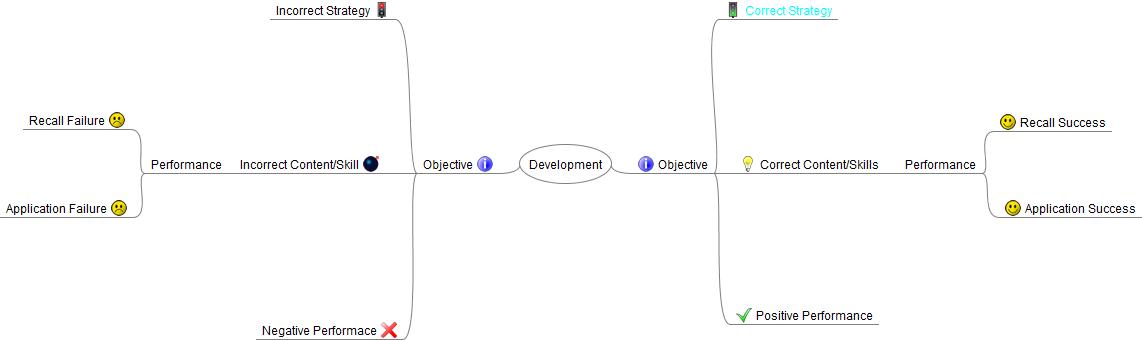
(Morris, Ross, Kalman, Kemp, 2011). If the design of the strategy is correct,
the performance recall or application, which is specified in the objective and
will be reflected by the strategy you designed, to support the intended
performance (Morris, Ross, Kalman, Kemp, 2011).

My training to become a certified phlebotomist was very effective. The course was designed by actual phlebotomists in conjunction with subject matter experts. We began the training by diving into course material so that we could become familiar with the terminology that would be used throughout the training. Included but not limited to were safety techniques, standard operating procedures (SOP’s), and active techniques which included graphics, videos, and animations. The resources available to us included but were not limited to were practicing phlebotomists, physical specimens, books, and ebooks. The corporate instructors used very good strategy in regards to implementing the best materials and resources based on training needs. One thing they could of done better is provide materials that could be reviewed outside of work, before or after trainings.
References:
Piskurich, G. M. (2005) Rapid
instructional design: Learning ID fast and right. San Francisco, CA :
Jossey-Bass/Pfeiffer
Morrison,
G. R., Ross, S. M., Kalman, H. K., & Kemp, J. E. (2011). Designing
effective instruction (6th ed.). Hoboken, NJ: John Wiley & Sons, Inc.
Subscribe to:
Posts (Atom)